
Written by: Pepe J. Hernandez, PhD, CPDT-KA
Grooming should support comfort and health. For some dogs, clippers, restraint, or a slippery table are frightening; for others, the problem includes pain or unfamiliar sensations. Preparation can help, but “stress-free” is a goal, not a service guarantee.
This guide explains how to check for pain, introduce tools gradually, practice handling, and plan with a groomer. You do not need a neuroscience degree to begin. A quiet room, a few treats, and the ability to stop are more immediately useful.
Quick Answer How to Prepare Your Dog for Grooming
- Rule out pain first. Skin problems, ear infections, sore joints, and matted fur can all make grooming hurt.
- Pair grooming with great things. Give high-value treats whenever your dog sees, hears, or feels something grooming-related.
- Practice brief, comfortable handling. A few seconds of an easy step may be enough to begin.
- Introduce tools gradually. Move from seeing, to hearing, to touching, to using each tool at your dog’s pace.
- Do short practice visits. Let your dog experience the salon without a full groom attached.
- Share your dog’s history with the groomer. Choose a gentle, force-free approach and communicate triggers up front.
- Stay calm and keep the day predictable. Exercise, a potty break, and a relaxed handoff set the tone.
Why Some Dogs Find Grooming Stressful and Why Preparation Works
Several factors can make grooming difficult, including equipment, previous experiences, pain, and unfamiliar handling. The sections below describe possibilities to investigate, not a ranked list of proven causes.
Sensory Overload Noise Scent and Touch
Dogs hear a different frequency range from people and can find grooming sounds, vibration, airflow, odors, and touch uncomfortable. There is no need to invoke inaudible frequencies to explain a frightening dryer. Reduce intensity and introduce each sensation separately.
Preparation works here by turning the volume down gradually. Instead of meeting the dryer for the first time on grooming day, your dog meets it in small, rewarded doses at home.
Past Experiences and Negative Associations
A frightening or painful experience can create negative associations with grooming. Limited exposure may also contribute. An unknown rescue history, however, is not evidence that a dog was mistreated.
The fix is to build new associations, so that the same sights and sounds predict something good instead of something scary. That is the heart of counter-conditioning, covered in Step 2 below.
Pain or Physical Discomfort
Pain can make handling uncomfortable and help create fear of future handling. Ask your veterinarian to assess sensitivity rather than assuming reluctance is purely behavioral.
That is why a vet check is the first step of any grooming-anxiety plan, especially if your dog’s behavior changed suddenly.
Breed and Temperament
Sensitivity varies among individuals. Breed history may offer context, but it cannot tell you why this dog dislikes a particular touch. Look at health, experience, and the specific situation.
Your Energy on the Way to the Salon
Dogs may respond to your movements, voice, and handling, but your worry is not automatically the cause of their fear. Move predictably and offer reassurance if your dog finds it helpful. Comforting a frightened dog does not reinforce the emotion of fear.
Signs Your Dog Is Stressed About Grooming
Dogs often show stress in subtle ways long before they growl or snap. Learning to recognize these early signals lets you slow down and adjust before your dog feels the need to escalate.
Early Stress Signals
- Lip licking, yawning, or turning the head away when they are not tired or hungry
- Panting when it is not hot, or a tightly closed mouth
- Trembling, hiding, or trying to leave the room
- Excessive shedding or drooling
- Refusing treats they would normally take
- A tucked tail, lowered body, or ears pinned back
Signs to Pause Immediately
- Freezing or going stiff
- Showing the whites of the eyes or staring hard
- Growling, snapping, or attempting to bite
- Struggling to escape or losing bladder control
Growling, snapping, freezing, and escape attempts are reasons to stop and reassess. Punishing warnings can increase risk without addressing the cause. Arrange professional help when handling cannot be done safely.
Step 1 Start With a Vet Check to Rule Out Pain
If your dog has suddenly become resistant to grooming, or has always been touchy in certain spots, book a veterinary exam before you begin any training. Ask your vet to look at:
- Skin: allergies, hot spots, or infections that make brushing and bathing uncomfortable
- Ears: infections and inflammation, which make ear cleaning and even head handling painful
- Joints and spine: arthritis or muscle pain, which can make standing on a table or lifting a leg for a trim hurt
- Teeth and mouth: dental pain can make face and muzzle handling feel threatening
- Nails and paws: overgrown nails or sore pads
You can also prevent one of the most common causes of painful grooming: mats. Dense mats pull on the skin and often require more time and more restraint to remove. Regular brushing at home removes dead hair before it tangles, and it doubles as a chance to check your dog’s skin for irritation, lumps, or fleas. Match the brushing schedule to your dog’s coat: a smooth-coated dog may need it only weekly, while long or curly coats need more frequent attention.
Step 2 Build Positive Associations With CounterConditioning
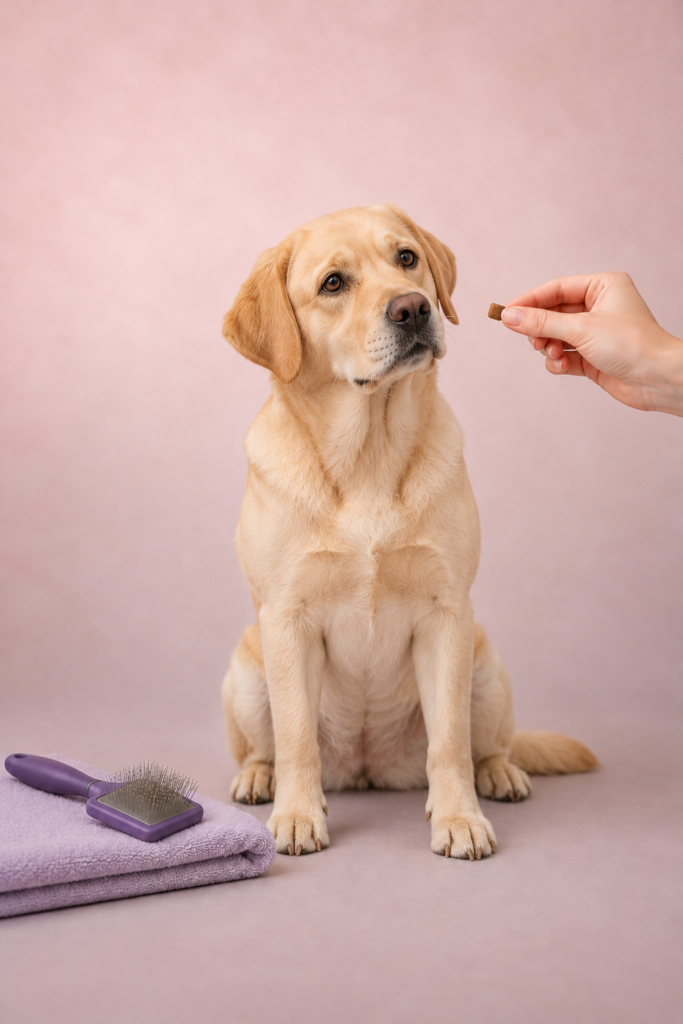
Counterconditioning pairs a manageable version of a grooming event with something pleasant. For a simple exercise, present the tool at a comfortable distance, then offer food. Do not wait for a frightened dog to perform a command before making the situation easier.
Pick Treats That Really Matter to Your Dog
Choose food your dog values and can safely eat; familiar kibble may be sufficient for an easy step. Richer food is not a substitute for reducing the challenge. Use tiny portions and account for dietary restrictions.
Play the Happy Grooming Game
- Bring out a brush, towel, or clipper (turned off) at a distance where your dog stays relaxed.
- Let your dog notice it, then immediately give a treat.
- Put it away, and the treats stop.
- Repeat for a few minutes, then end the session while your dog is still happy.
If your dog refuses treats or seems tense, you are too close or moving too fast. Increase the distance and go back to an easier step.
Step 3 Desensitize Your Dog to Grooming Tools and Handling
Desensitization gradually introduces a stimulus at an intensity the dog can manage. Counterconditioning pairs it with something pleasant. These methods are included in veterinary behavior guidance; success depends on timing, intensity, health, and the dog’s history. [2]
Build a Desensitization Ladder
Break each tool into small steps and move up only when your dog is loose, relaxed, and eager for treats at the current step. For clippers, a ladder might look like this:
- Clippers visible across the room (treat)
- Clippers on a nearby table (treat)
- Clippers turned on at a distance (treat)
- Clippers on, held closer (treat)
- Clippers on, touched to your hand near your dog (treat)
- Running clippers remain away from the dog while you reward comfortable observation
- Actual clipper contact and use are introduced with a skilled professional once simpler steps are comfortable
Use the same idea for the hair dryer, nail grinder or clippers, brush, spray bottle, and the sound of running water. If your dog shows stress, go back one or two steps and make the next one smaller. Many dogs need days or weeks for a single tool, and that is normal.
Practice Daily Handling Exercises
Begin with one comfortable body area and a few seconds of practice. The following examples are possible later steps, not a checklist to complete in one session.
- Paws: begin with a brief light touch, then gradually teach a comfortable paw lift without squeezing toes
- Ears: lift the flap, look inside, and gently rub the base
- Mouth and face: lift a lip, touch the muzzle, cup the chin
- Tail and hindquarters: lift the tail and touch the rear area
- Belly and legs: gentle strokes, then light pressure similar to brushing
Keep sessions short, end on success, and stop if your dog pulls away. Your dog’s willingness to stay is your signal that the level is right.
Teach Cooperation Skills and Give Your Dog Choices
Practice a clear participation signal and honor it. Cornell’s cooperative-care guidance describes building comfort through voluntary participation. Start with harmless touches; a pause signal cannot prevent injury from a sharp tool. [5]
- Chin rest: your dog places their chin in your hand or on a towel to signal readiness.
- Start button: your dog offers a specific behavior, like a nose touch or chin rest, before each step continues. When they stop offering it, you pause.
- Stationing: your dog learns to stand or sit on a mat or platform and stay there for rewards.
These skills provide a practical way to check willingness and pause before discomfort escalates.
Step 4 Get Your Dog Comfortable With the Salon Environment
Do Short Happy Visits
Arrange a brief, quiet introduction with the salon: enter, receive treats if comfortable, and leave. A nail trim or grind is not a neutral “happy visit” for a dog worried about nail handling. Agree in advance that the visit may involve no grooming.
Reduce the Sensory Load at Home
- Play recordings of dryers, clippers, and barking dogs at a low volume during meals or play, and raise the volume very gradually.
- Get your dog used to standing on non-slip surfaces such as a yoga mat or bath mat.
- Use dog-appropriate grooming products and avoid deliberate exposure to strong fragrances. Ask the groomer about sensitive skin and product choices.
- Practice standing on a non-slip floor mat. Leave elevated-table practice to a professional with appropriate equipment and fall prevention.
Step 5 Choose the Right Groomer and Share Canine History
The groomer you choose can make or break your dog’s experience. Look for a salon that is patient, transparent, and comfortable with fearful dogs. Signs of a good fit include:
- They ask about your dog’s personality, health, and past experiences when you book
- They take a few minutes to meet your dog on arrival rather than taking them straight to the back
- They use gentle, force-free handling and take breaks when a dog needs one
- They do not overbook, so your dog is not left waiting for hours
- They are open about their process and welcome questions
Be honest about your dog’s triggers, whether that is nails, dryers, being touched on the feet, or a bad past experience. Groomers cannot adjust what they do not know, and most appreciate the heads-up. If your dog has a history of biting or snapping, tell the salon before booking so they can plan safely.
Step 6 Plan the Day Before and Grooming Day
The Day Before
- Give a good walk or play session, and keep evening routines calm.
- Do a quick brush-through and check for new mats.
- Confirm the appointment time, drop-off and pick-up plan, and the salon’s cancellation and late-arrival policy so you are never rushing or forced into an appointment when your dog is unwell.
- Write down anything your groomer should know: sensitive spots, medical notes, behavior history, and preferred treats.
The Morning of the Appointment
- Offer a good walk and a potty break before you leave, so your dog is comfortable and can settle.
- Keep meals normal unless your veterinarian gives different instructions, particularly for sedation or a medical condition. Do not withhold food simply to make training treats more persuasive.
- Arrive a few minutes early so you are not rushing, and give your dog time to sniff and settle.
- Keep your own tone relaxed, upbeat, and matter-of-fact.
Drop Off and Pick Up
- Use a calm handoff that suits your dog. Some dogs benefit from the owner staying; others do better with a different arrangement. Discuss the individual response with the groomer.
- Give the groomer any last-minute notes and your contact details.
- At pick-up, greet your dog warmly, ask how the session went, and ask what worked and what did not.
- Reward your dog with a favorite treat or a relaxed walk on the way home.
Your Four Week Grooming Prep Timeline
|
When |
What to Do |
|---|---|
|
Week 4 |
Book a vet check if needed. Start brushing daily and begin gentle handling exercises with treats. |
|
Week 3 |
Begin counter-conditioning with the brush, towel, and sounds at low volume. Start the desensitization ladder for one tool. |
|
Week 2 |
Continue the ladder for a second tool, practice on a non-slip mat, and do a short salon visit. |
|
Week 1 |
Book or confirm the appointment, share your dog’s history with the groomer, and keep practicing short, positive sessions. |
|
Day before |
Exercise, a quick brush, and a calm evening. Pack notes and treats. |
|
Grooming day |
Walk, potty break, arrive early, and keep goodbyes brief and calm. |
|
After |
Reward, decompress, and note what went well for next time. |
Not every dog needs the full four weeks, and some need longer. Treat the timeline as a guide, not a deadline. If your dog is struggling at any step, repeat it.
Special Cases Puppies Rescues Seniors and Reactive Dogs
Puppies
Begin brief, positive handling while a puppy is young, without forcing exposure. AVSAB emphasizes safe early socialization during the first three months. Coordinate salon visits and infection precautions with your veterinarian. [4]
Structured, trainer-moderated classes can also help. For example, this guided puppy socialization program in NYC focuses on calm greetings, confidence, and recovery skills rather than free-for-all play, which is the same approach that makes grooming easier later on.
Rescue Dogs With Unknown Histories
You may not know what your rescue has been through, so go slower than you think you need to. Let your dog build trust with you at home first, keep early grooming sessions extremely short, and watch closely for stress signals. Tell your groomer everything you know, even if it is just “history unknown.”
Senior Dogs
Older dogs may develop new sensitivities, especially with joint pain, poor vision, or hearing loss. Schedule shorter sessions with breaks, use non-slip surfaces, and check with your vet before starting if your senior has become newly resistant to grooming.
Dogs Who Growl or Snap
If your dog has bitten or come close to biting during grooming, safety comes first. Work with your vet and a qualified trainer or veterinary behaviorist, and be transparent with your groomer. Some professionals recommend gradually teaching a dog to accept a well-fitted basket muzzle as a positive experience, but this should be done slowly with expert guidance, never as a last-minute restraint on grooming day.
Common Mistakes That Make Grooming Anxiety Worse
- Forcing your dog to “just get through it.” This confirms their fears and can escalate them.
- Punishing growling or snapping. Suppressing a warning does not resolve its cause and can increase risk.
- Flooding. Long, uncontrolled exposure to a scary tool with no way to escape usually backfires.
- Skipping the vet check. Treating pain as a behavior problem can make everything worse.
- Rushing the ladder. Moving on before your dog is truly relaxed teaches them that early signals are ignored.
- Ignoring what helps. Offer calm contact if your dog seeks it; avoid holding or crowding a dog who wants space.
- Expecting overnight results. Progress is usually gradual, with good days and setbacks.
After the Groom Keep Progress Going
The end of a session is where the next one begins. Reward your dog, let them decompress, and keep up short handling and brushing practice between appointments so their skills do not fade. Many owners find that scheduling grooming at regular intervals, rather than waiting until the coat is matted, keeps sessions shorter and more comfortable for everyone. For more grooming tips and pet-care advice, browse the blog.
Track what works: which treats, which tools, which time of day, and which steps of the ladder. A short note after each appointment helps you and your groomer make the next visit easier.
When to Get Professional Help
Preparation helps most dogs, but some need more support. Talk to your vet if your dog:
- Panics, shakes, or tries to escape every time grooming is mentioned
- Has bitten or seriously attempted to bite during grooming or handling
- Shows sudden new fear, especially with signs of pain
- Does not improve after several weeks of consistent, gentle practice
For severe fear or unsafe handling, ask your veterinarian about a behavior referral and an appropriate medication or sedation plan. Medication can be part of humane care. Do not give human medications or supplements without veterinary guidance.
Frequently Asked Questions
How do I calm my dog before grooming
Exercise your dog beforehand, give a potty break, keep your own tone calm and upbeat, and avoid rushing. Long-term, the best way to keep dogs calm is counter-conditioning and gradual desensitization, so the tools and the salon feel familiar and predictable.
How long does it take to get a dog used to grooming
It depends on your dog’s age, history, and sensitivity. Many dogs show improvement in a few weeks of consistent practice, while dogs with strong fears may need months. Short, frequent sessions work better than occasional long ones.
Should I stay with my dog during grooming
Ask about a supervised trial with you present if appropriate. Owner presence helps some dogs and distracts others. There is no universal rule that a fearful dog should be separated from their owner.
Can I sedate my dog for grooming
Ask your veterinarian whether anti-anxiety medication, sedation, or grooming in a veterinary setting is appropriate. These options are not interchangeable. Follow the prescribed plan and tell the groomer exactly what was given. Pecas does not groom dogs under the effects of any medication. If your dog requires medication for grooming, you will need to find another grooming provider that can safely accommodate those needs, in consultation with your veterinarian. Read more
What if my dog bites the groomer
Tell the salon about any history of biting before you book, and work with a veterinarian and qualified behavior professional to address the underlying fear. Groomers have a right to work safely, and honest communication protects everyone, including your dog.
When should a puppy have their first grooming appointment
Ask your vet about vaccination timing and salon requirements, but you can begin gentle handling and brushing at home right away. Many groomers welcome short introductory visits for puppies before their first full groom.
Final Thoughts
More comfortable grooming comes from addressing the dog’s actual needs. Reduce pain and fear, practice manageable steps, and agree with the groomer on what can safely be completed. A partial groom with a workable next step can be a useful result.
About the Author
Pepe J. Hernandez is the founder of PJH Dog Training and a CPDT-KA certified professional dog trainer with a Ph.D. in behavioral neuroscience. Based in New York City, he specializes in reactive and fear-based behavior, using force-free, neuroscience-based methods that follow the Least Intrusive, Minimally Aversive (LIMA) framework.
This article is for general educational purposes and is not a substitute for advice from your veterinarian or a qualified behavior professional. If your dog shows signs of pain, aggression, or severe anxiety, consult a professional before continuing.
References
Numbered references support the research and professional guidance cited in the text. Practical examples are suggested exercises, not tested treatment schedules.
[1] American Veterinary Society of Animal Behavior. Humane Dog Training Position Statement (2021). Professional guidance. Read source
[2] Hammerle M et al. 2015 AAHA Canine and Feline Behavior Management Guidelines. Journal of the American Animal Hospital Association 51, 205–221. Professional guidelines. Read source
[4] American Veterinary Society of Animal Behavior. Puppy Socialization Position Statement. Professional guidance. Read source
[5] Cornell Richard P. Riney Canine Health Center. Grooming and Cooperative Care (February 2026). Owner education. Read source